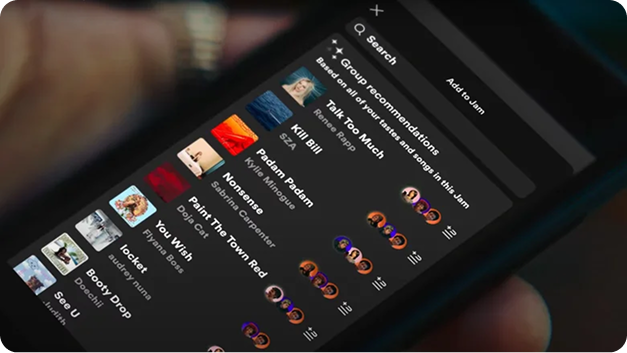
Lead Project Designer
MVP • Design Vision • Dev Specs
2024-2025 • In Development


About Project
Spotify partnered with United Airlines to integrate direct streaming into seatback In-Flight Entertainment (IFE) systems, allowing passengers to seamlessly access their favorite content at 35,000 feet.
Business goals.
In partnership with United Airlines build and launch industry leading streaming solution for airline passengers. Capitalize on high-volume passenger traffic to accelerate new user acquisition and platform growth.
Research Into Users Mindset
Challenges
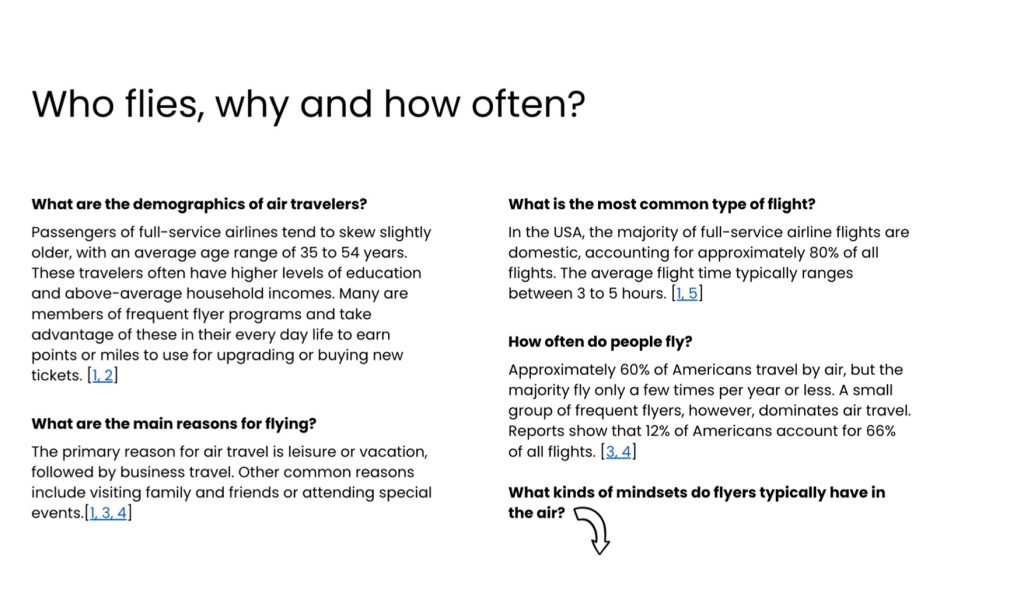
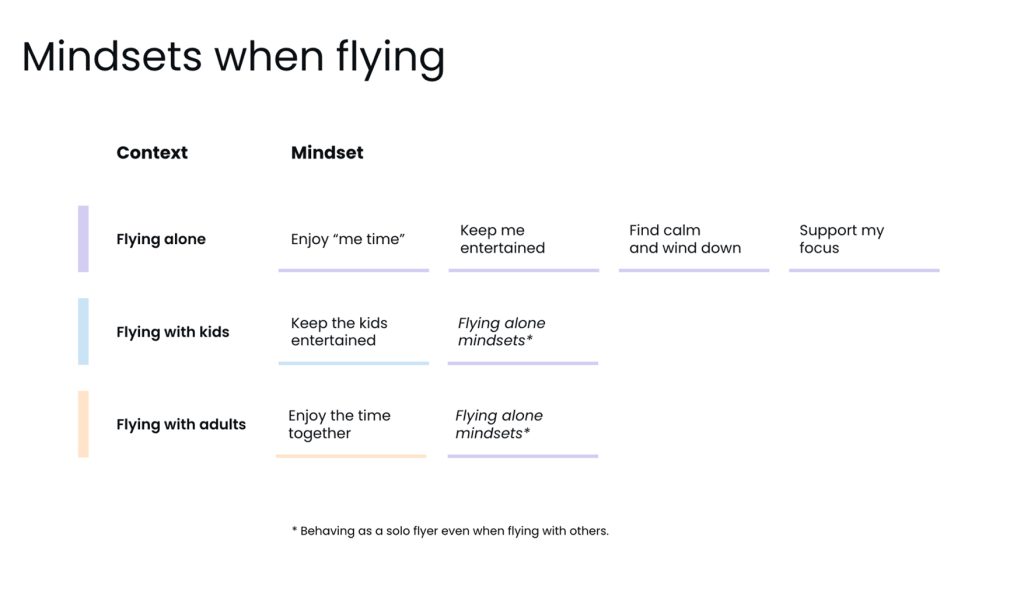
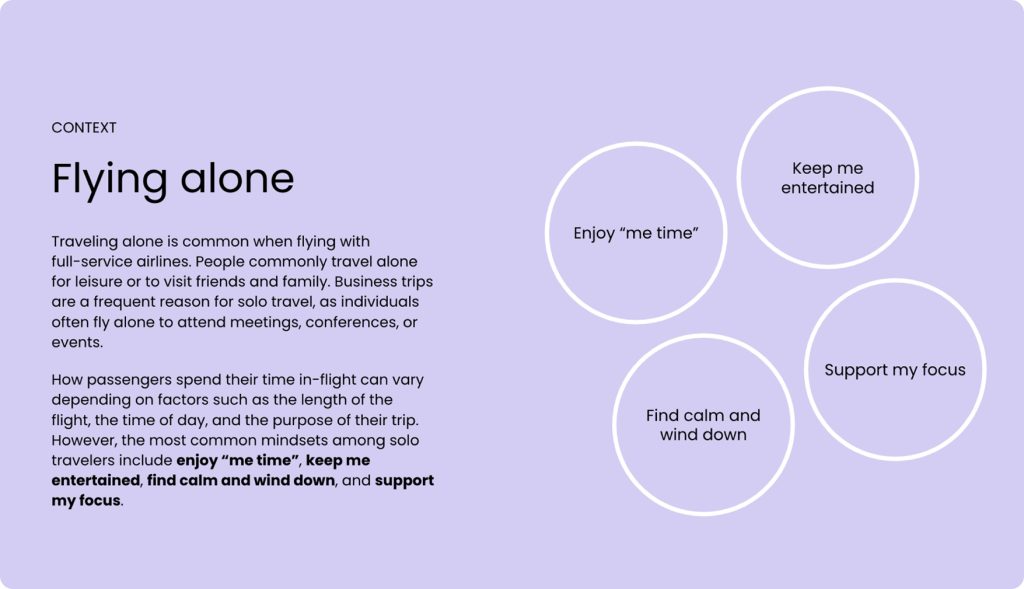
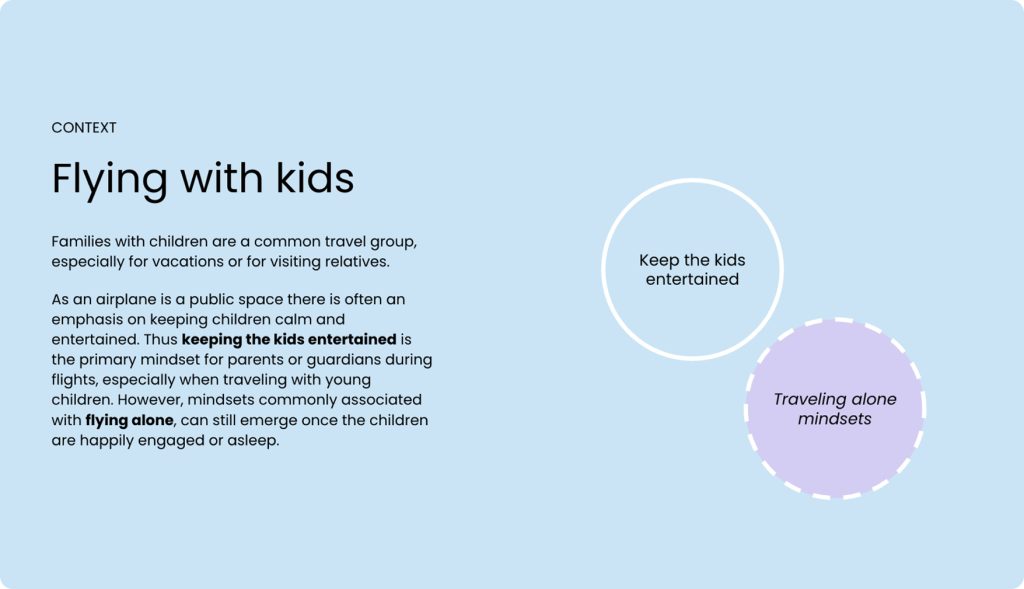
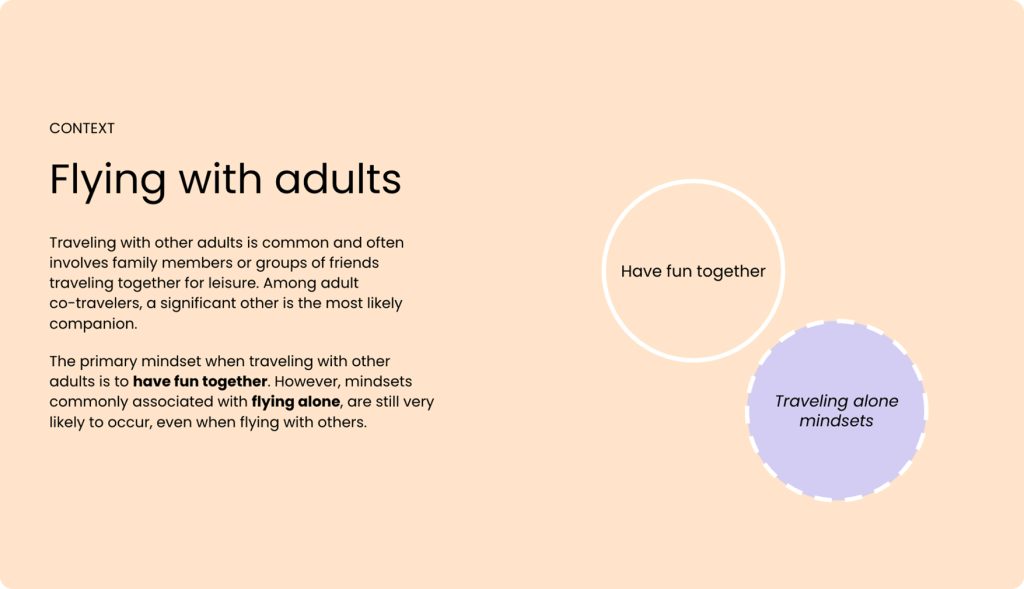
The Flying Mindset
To bridge this data gap, we conducted targeted user surveys to uncover passenger mindsets and expectations. Our research specifically investigated traveler demographics, behavioral motivations, and flight frequencies. Who flies, why, and how often?
Mapping Out User Journey
Challenges

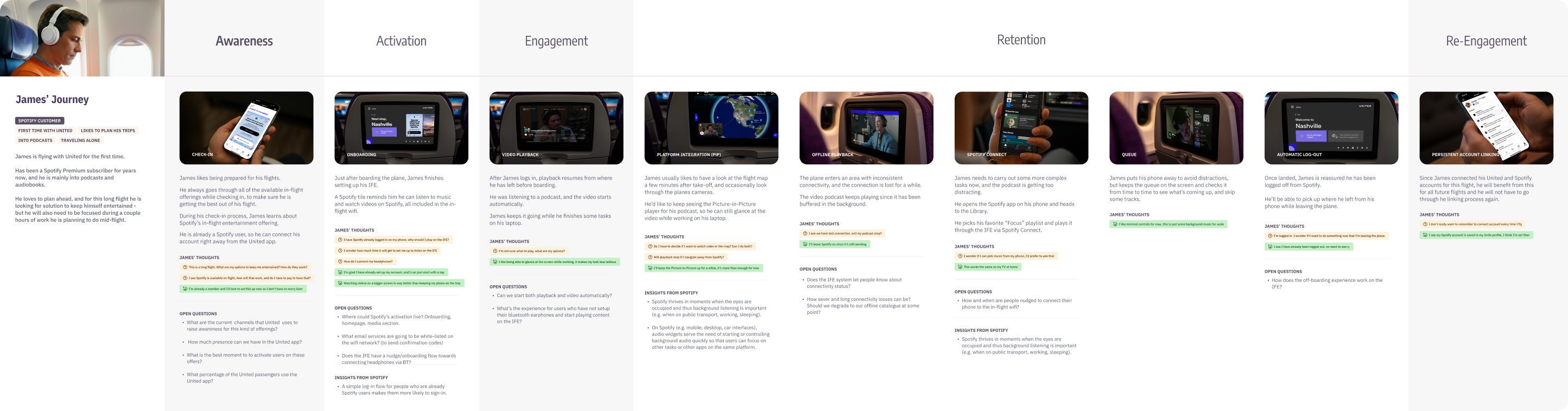
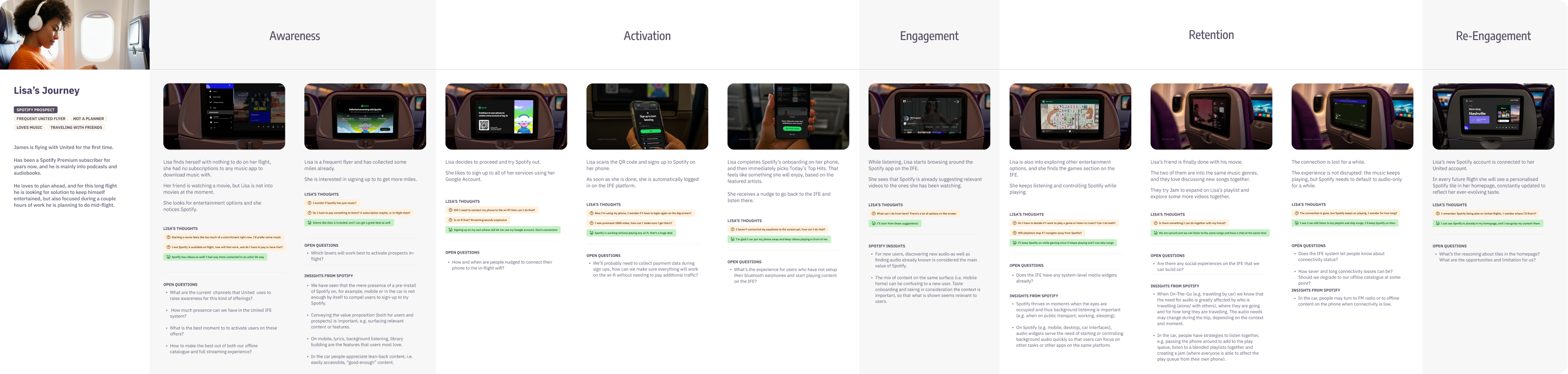
Holistic Journey Mapping
It became critical to include Awareness & Activation as part of the holistic journey, this helped us uncover high-impact product opportunities along with friction points that otherwise would have been missed.
Shaping Up Design Strategy
Challenges
Lean & Robust
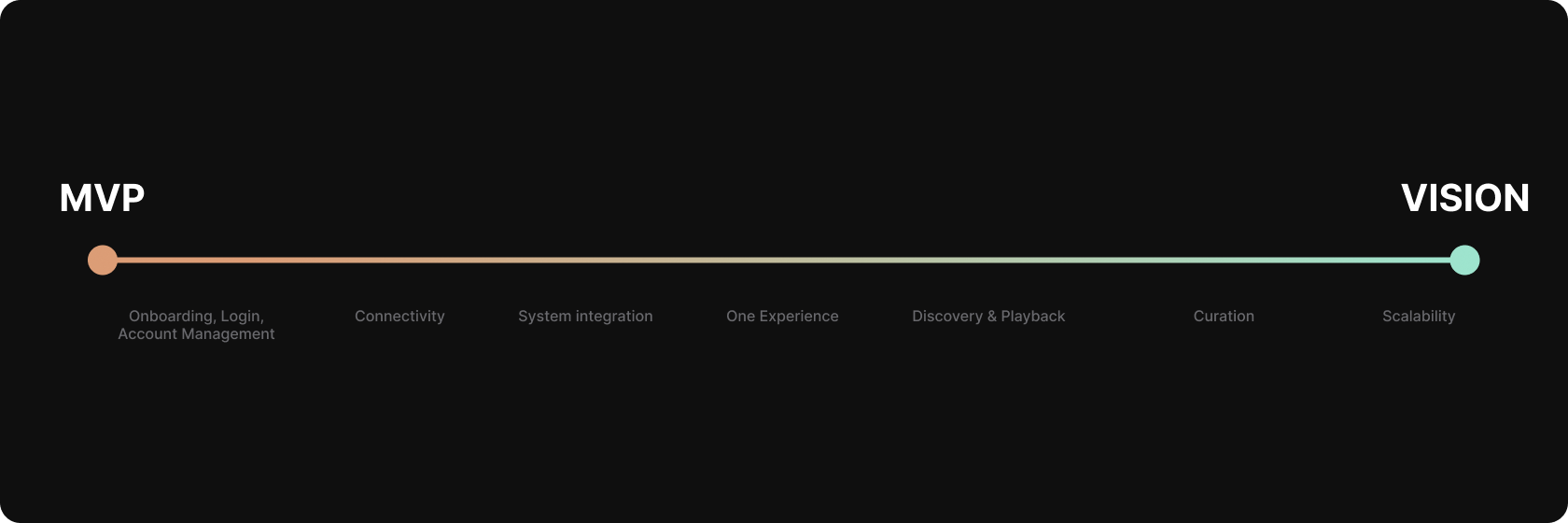
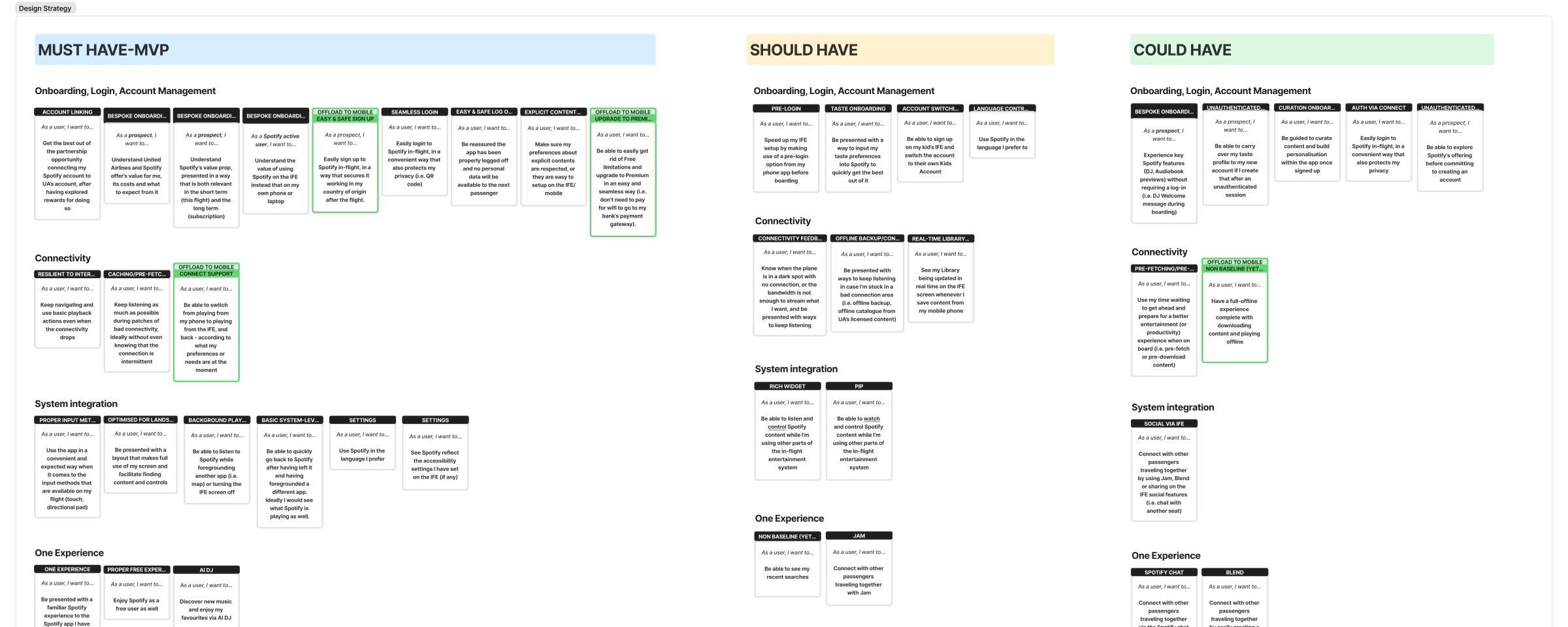
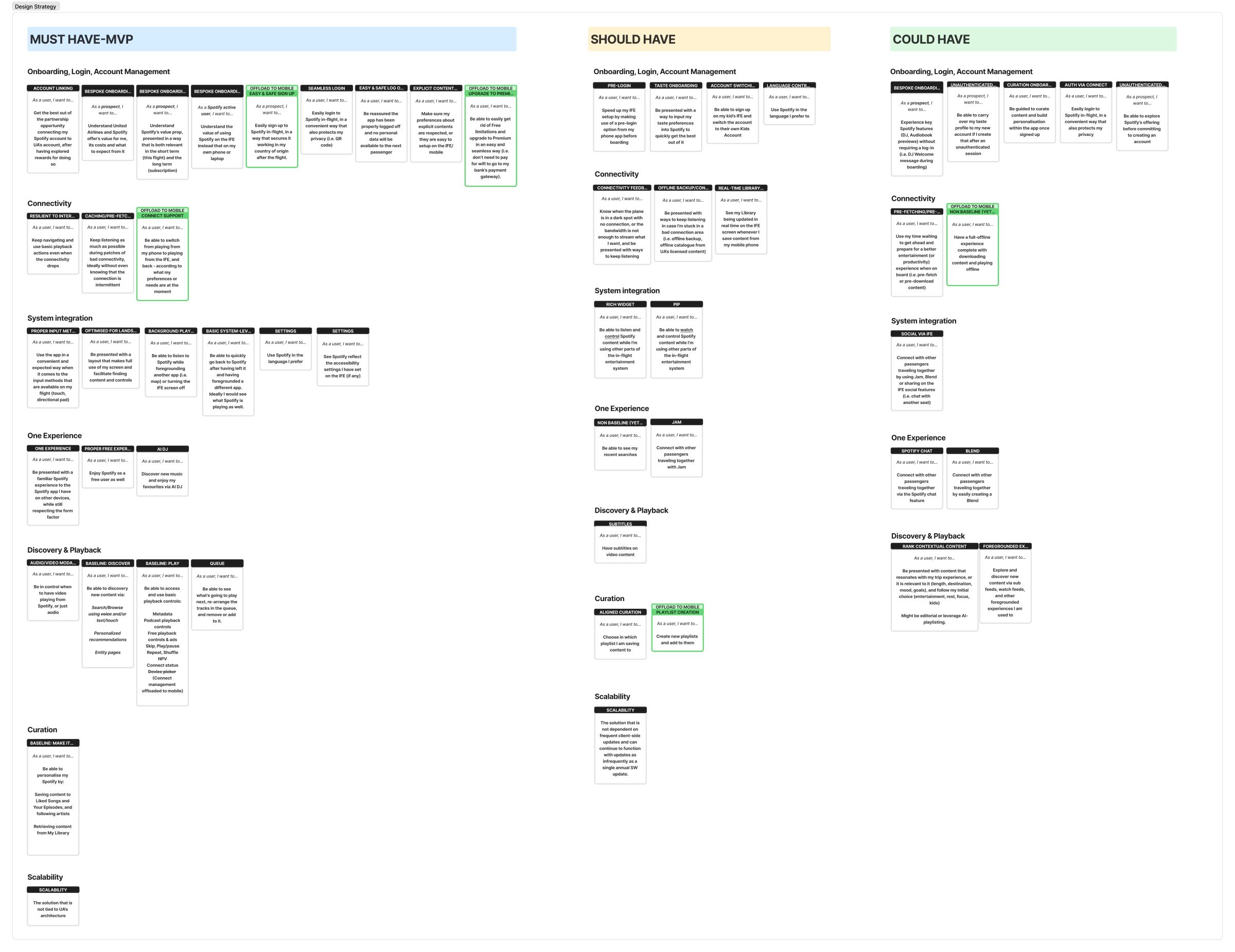
Dual-track design strategy to balance partner constraints and development resources. Prioritize delivering a launch-ready MVP for immediate validation and testing, while establishing a "Design North Star" for the long-term product and design vision.
Building MVP For Internal Test
Challenges
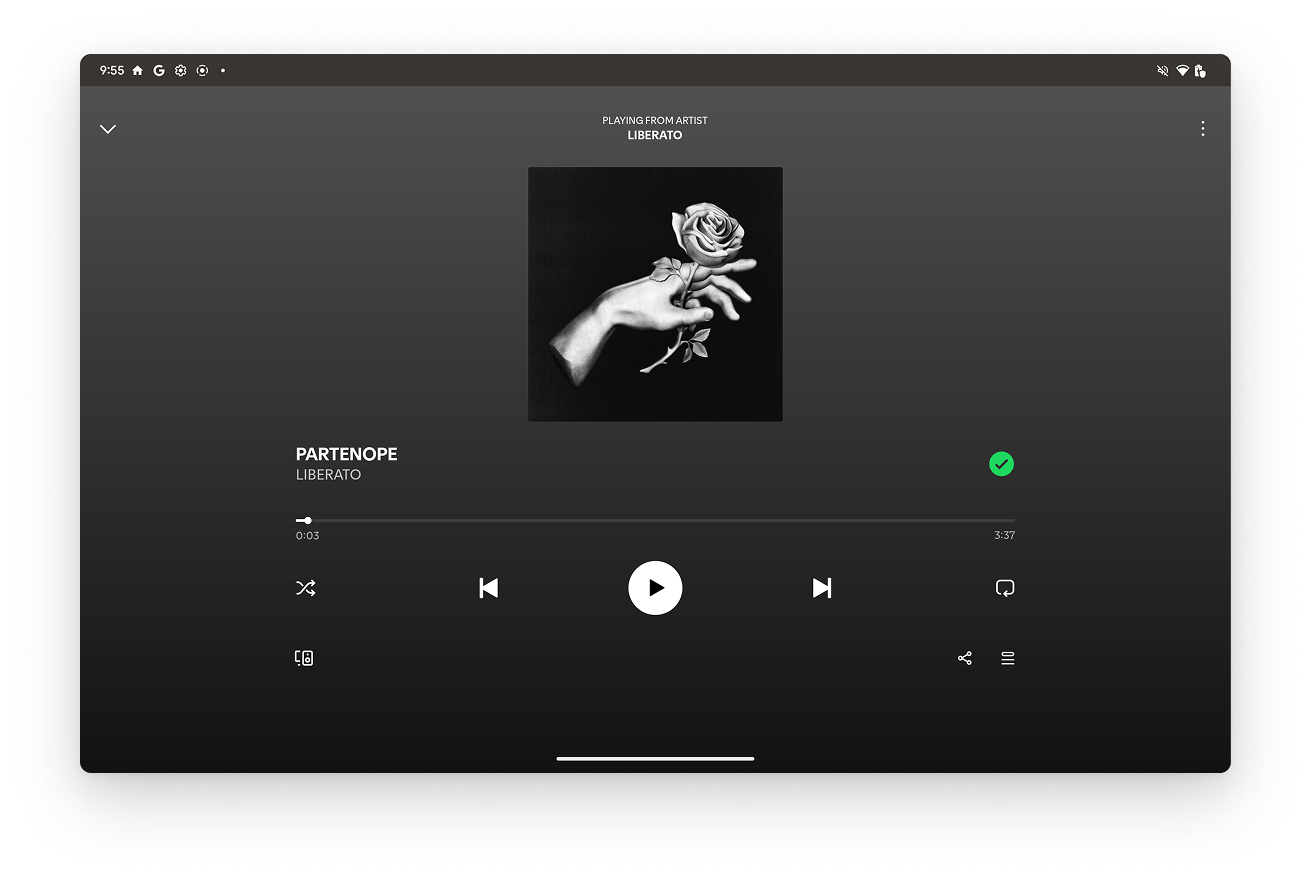
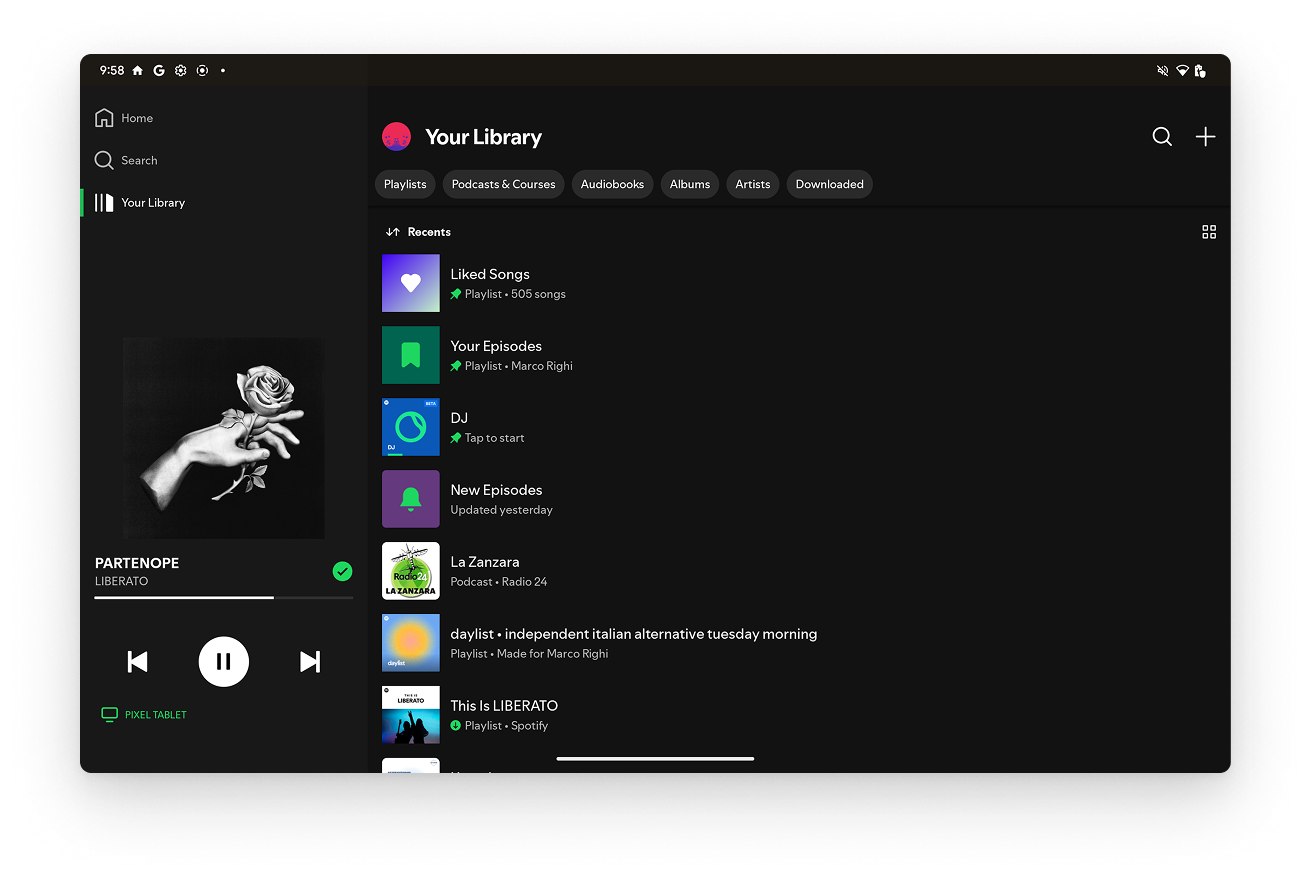
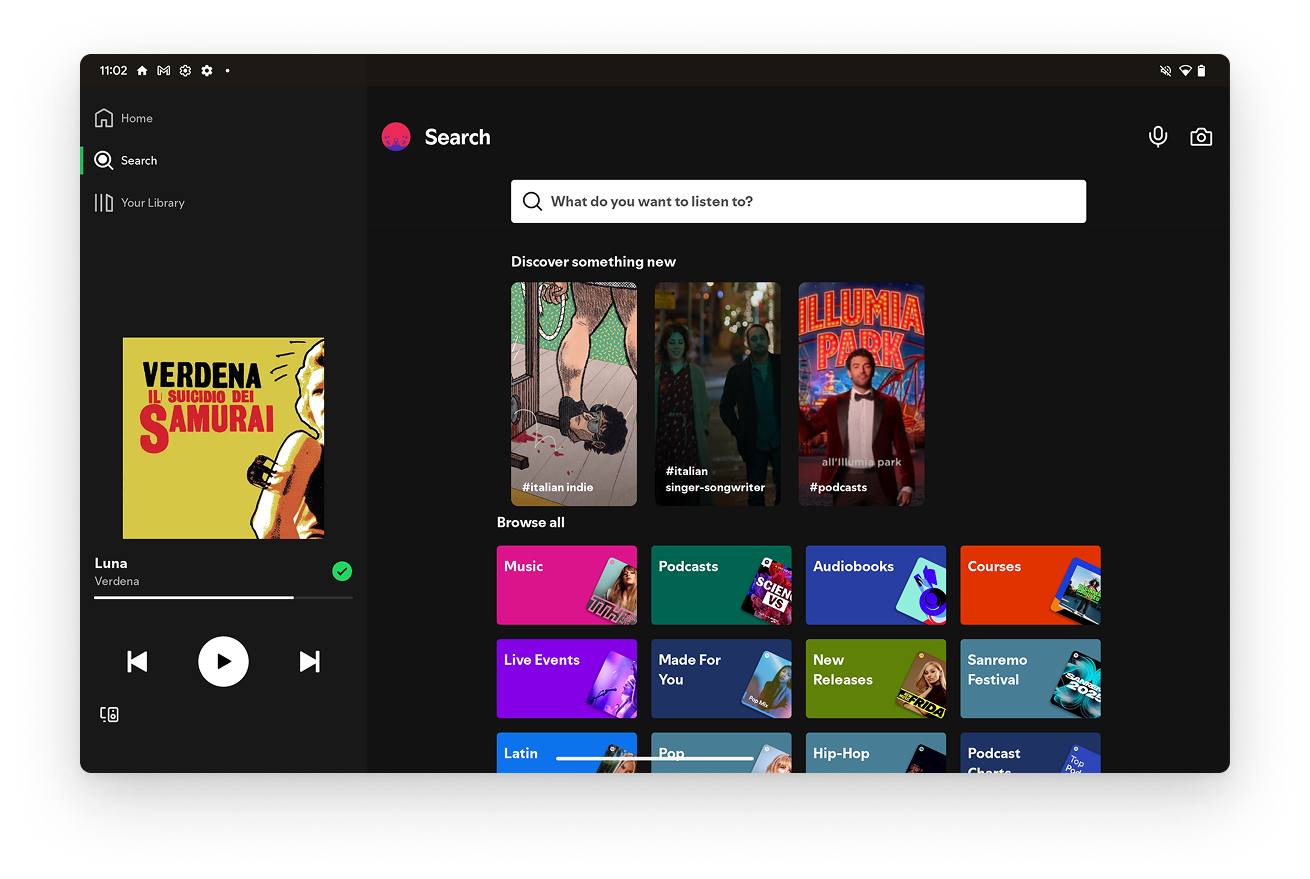
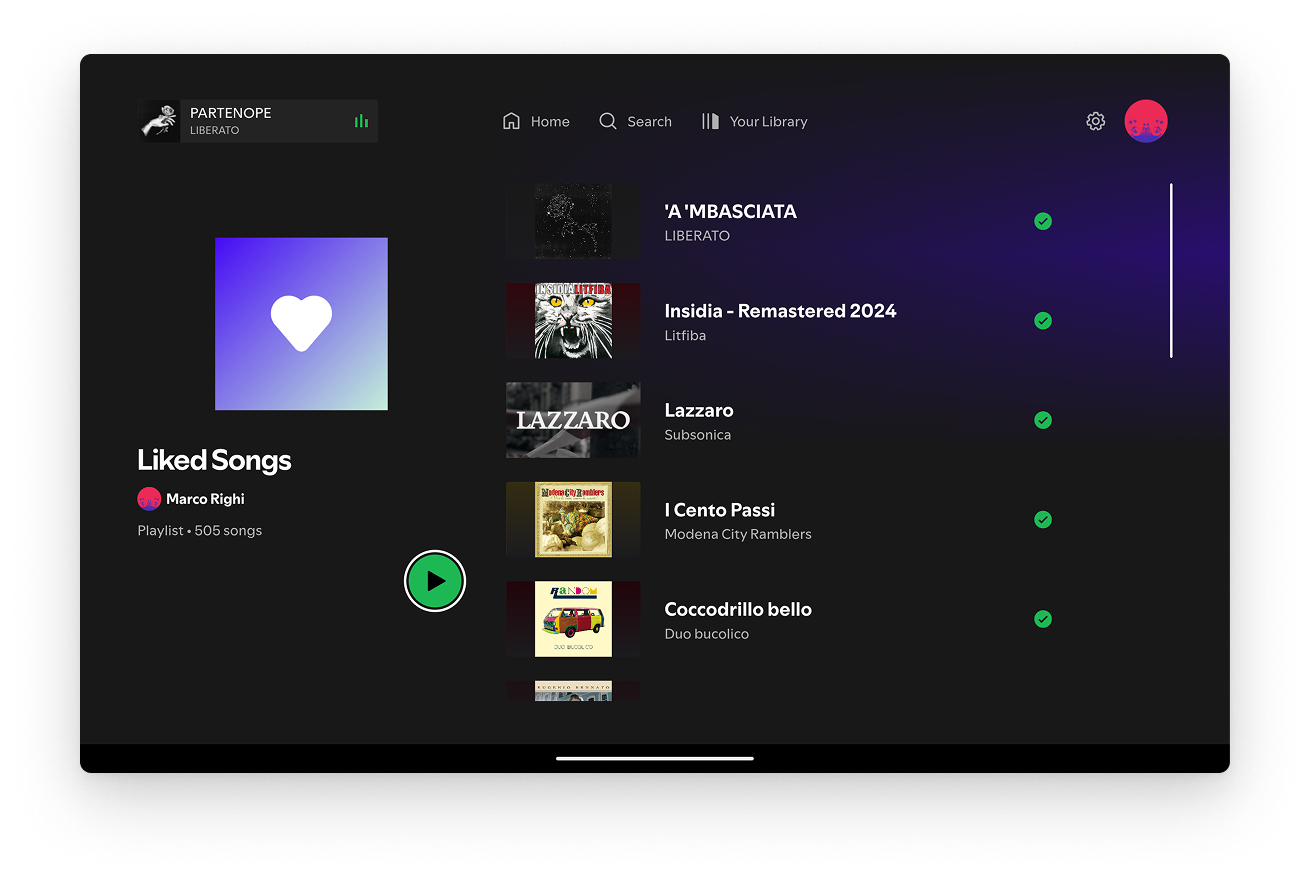
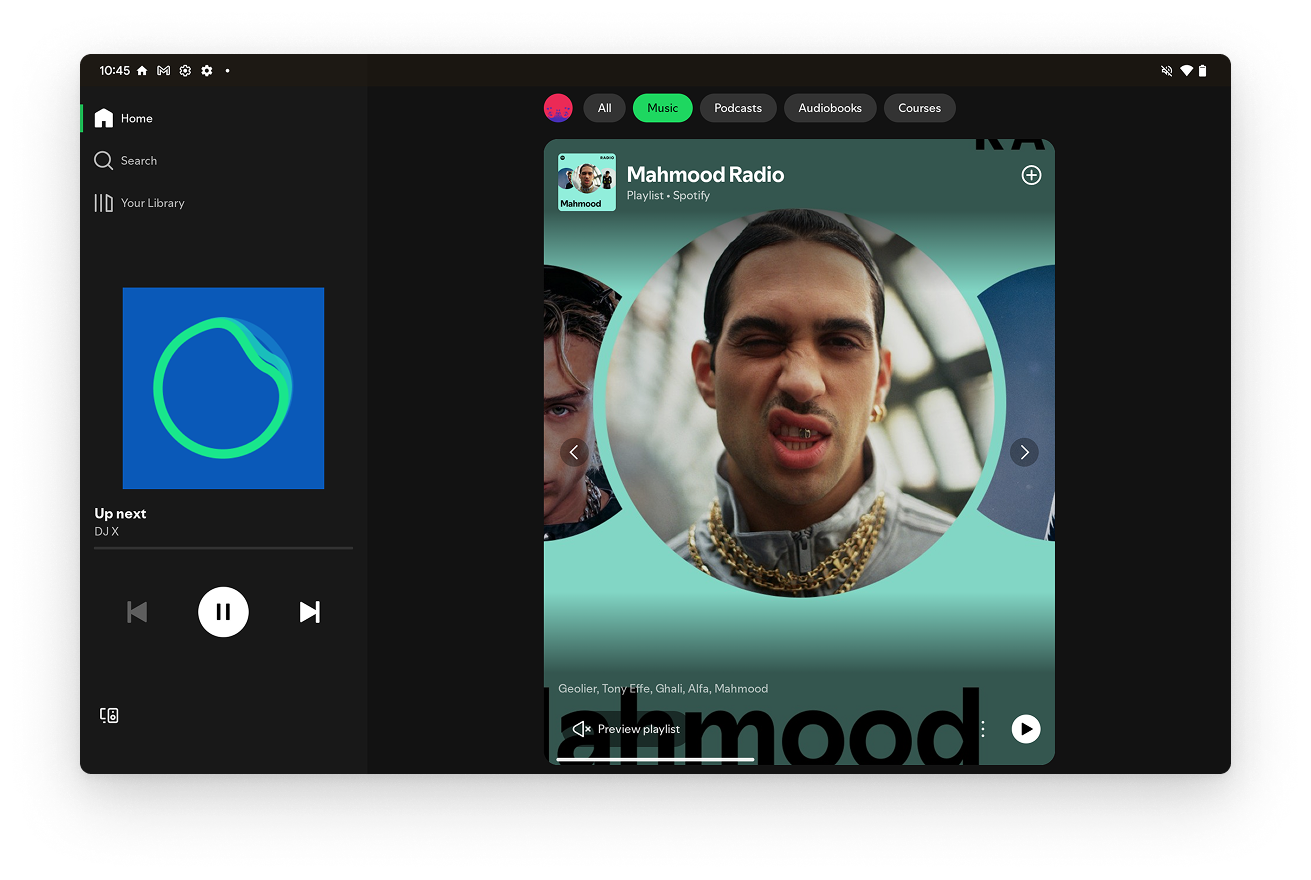
Tablet framework
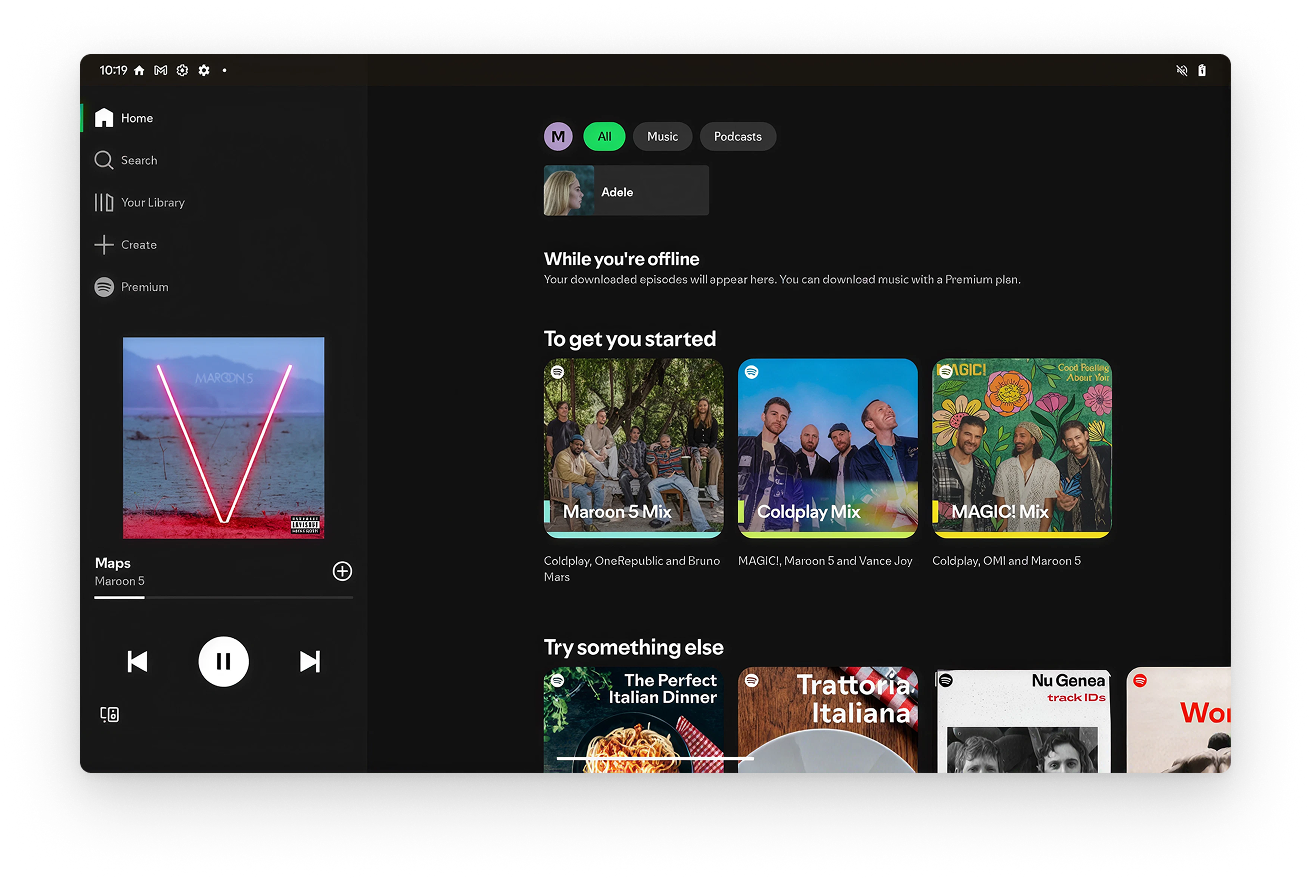
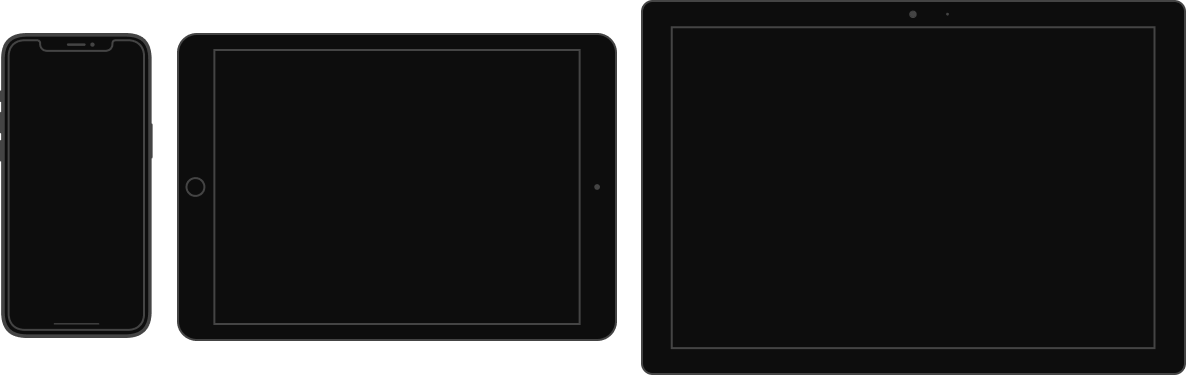
Our initial tech assessment suggested that since our tablet app and IFE screen dimensions are highly comparable and the IFE hardware ran on Android. We tested the solution by implementing some basic IFE functionality and running a prototype on an actual IFE device.
Usability Flags
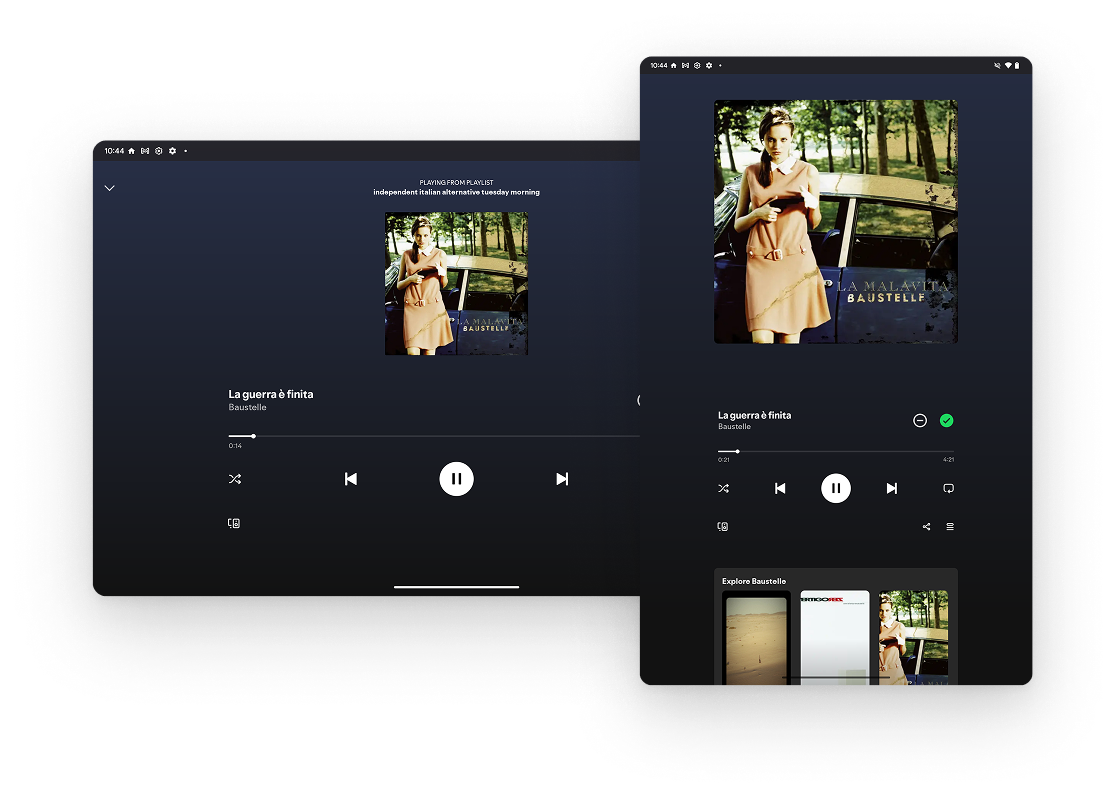
Testing revealed major UX issues, three of these issues are highlighted below
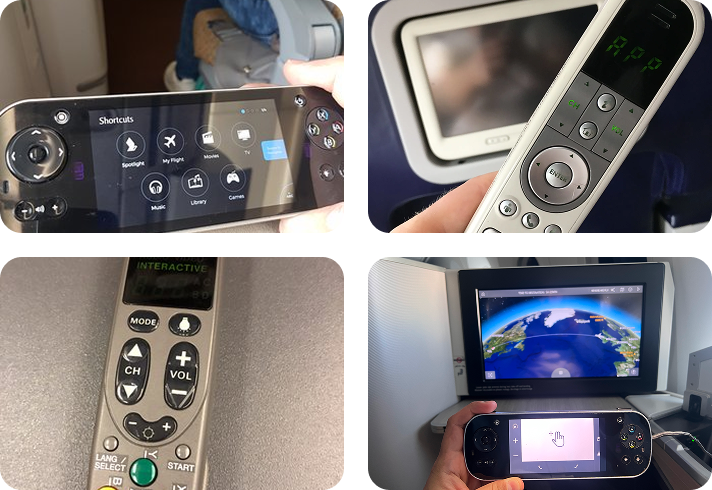
D-pad incompatibility
While the tablet framework naturally accommodated touch interactions, severe usability issues emerged when evaluating the navigation for D-pad.
Legibility
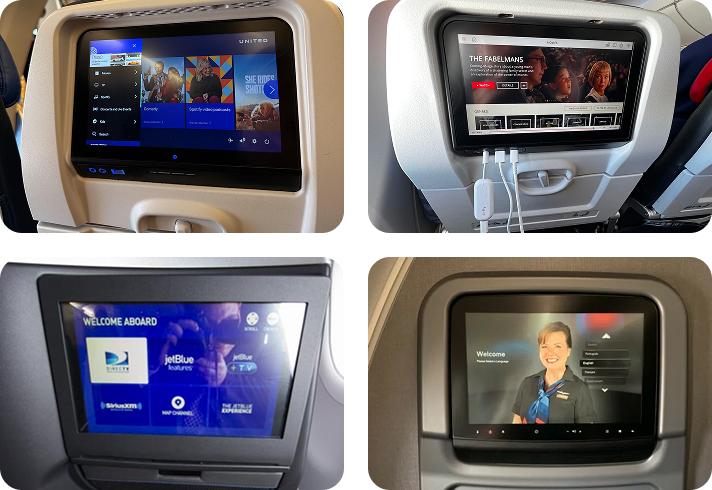
Legibility varied significantly based on seating ergonomics: while effective for standard viewing distances, content became difficult to read on displays mounted farther away, highlighting an accessibility challenge across specific cabin configurations.
Layout optimization
The tablet app mirrored portrait mobile layouts and lacked optimization for landscape, which was the mandatory default view for IFE. This at times created UI irregularities.
Audit
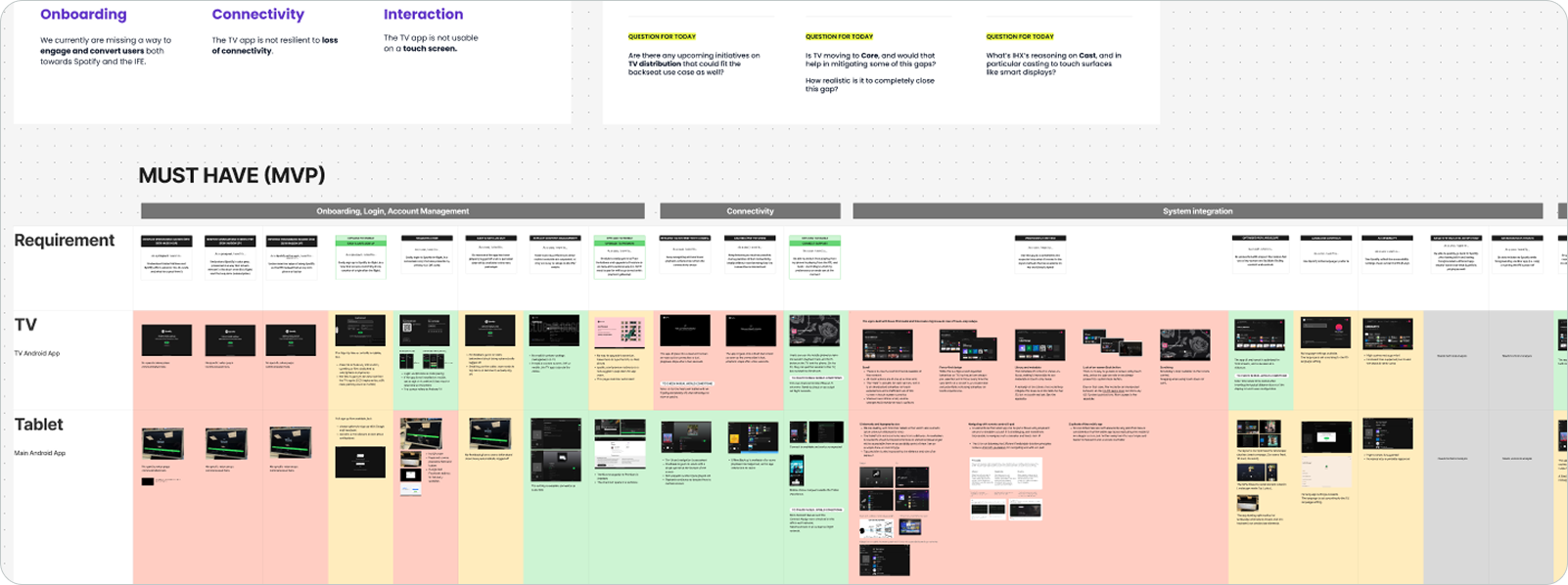
I initiated an audit across our existing core apps to identify scalable design patterns viable for IFE.
TV as Baseline Framework
Benefits
Challenges
Adapting MVP & Scaling Vision
AWARENESS
MVP
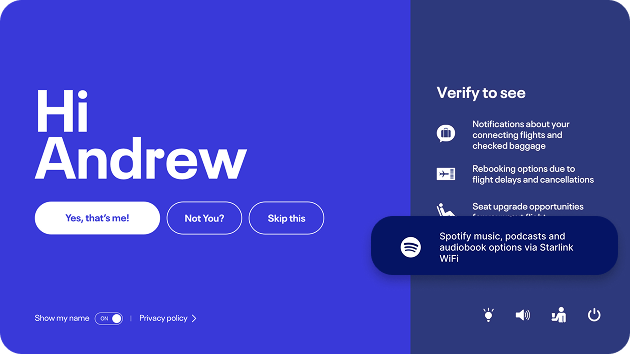
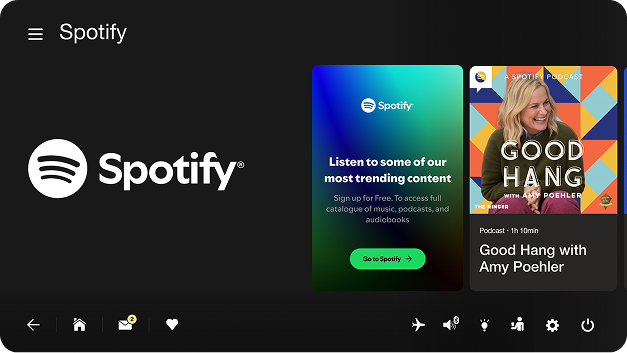
To address the challenges around awareness we added Spotify messaging in welcome screen. Co-designed with partner.
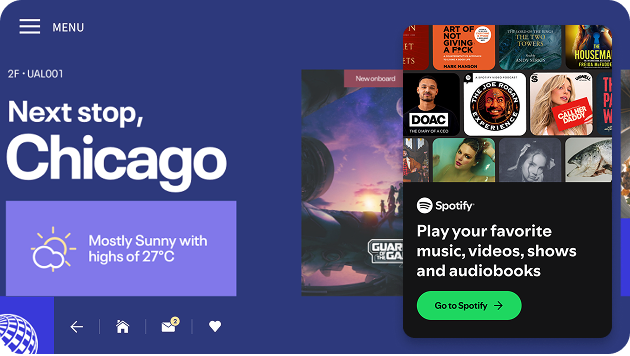
We also made custom tile that would stand out on the main Home screen of United Airlines UI. Showing Spotify extensive catalogue.
Vision
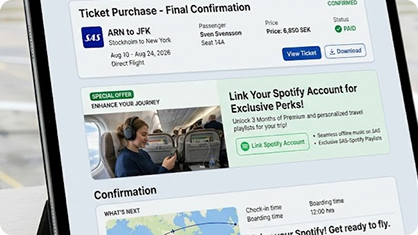
Partner with the airline to drive Spotify awareness during the booking flow.
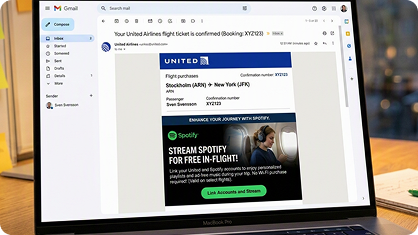
Integrate Spotify’s value proposition into booking confirmation emails to capture post-purchase interest.
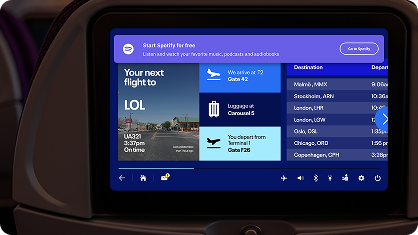
Utilize OS level notification and prompts to create awareness around Spotify.
Activation
MVP
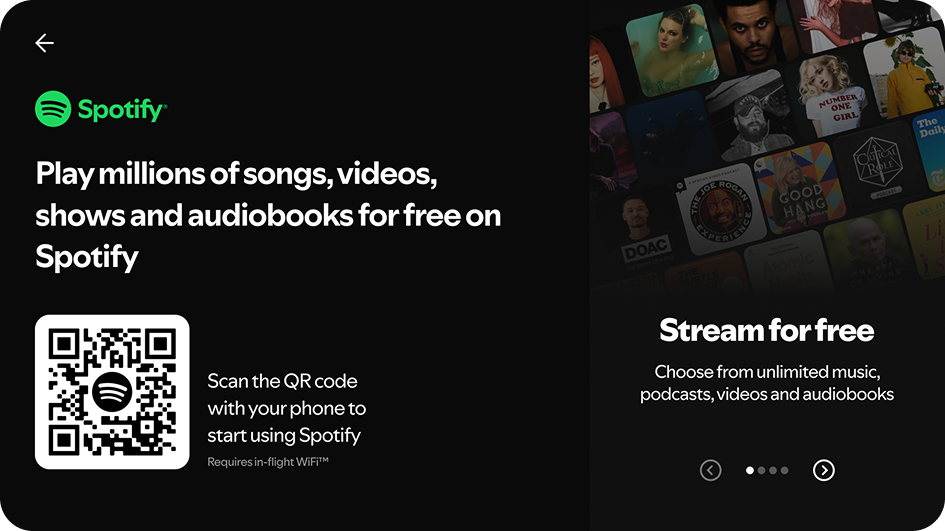
We replaced form-heavy onboarding with a custom screen featuring a single-click QR code login that instantly highlights Spotify’s value proposition.
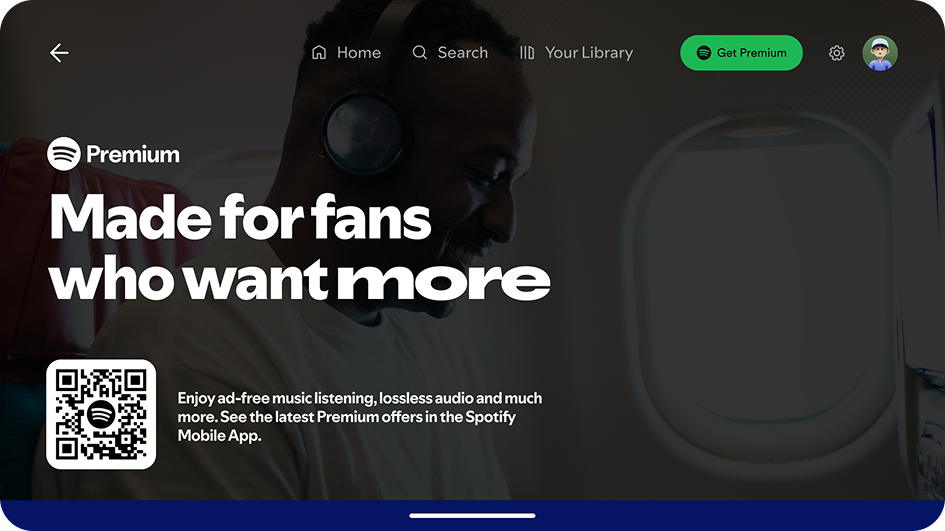
To activate our premium plans and options we created a completely new screen which used QR code to guide users to the Premium tier plans.
Vision
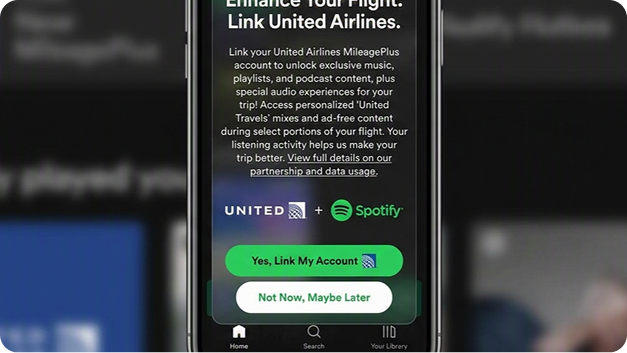
Activate Spotify accounts with users United Airlines credentials
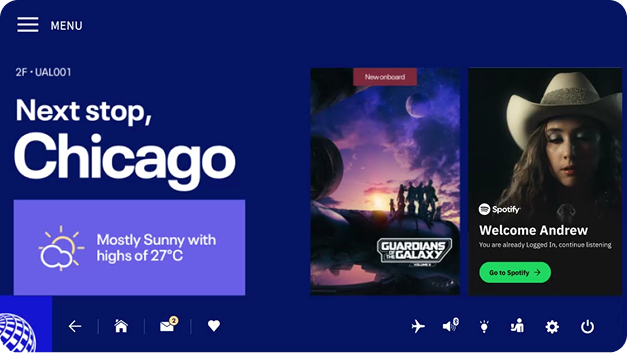
Log existing users in automatically as soon as they onboard
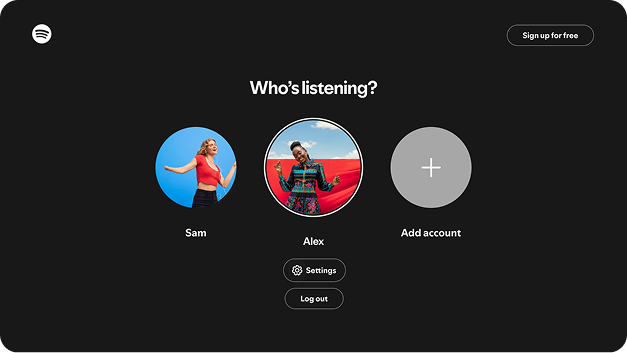
Allow for Multi-account setup so users can switch easily
Engagement
MVP
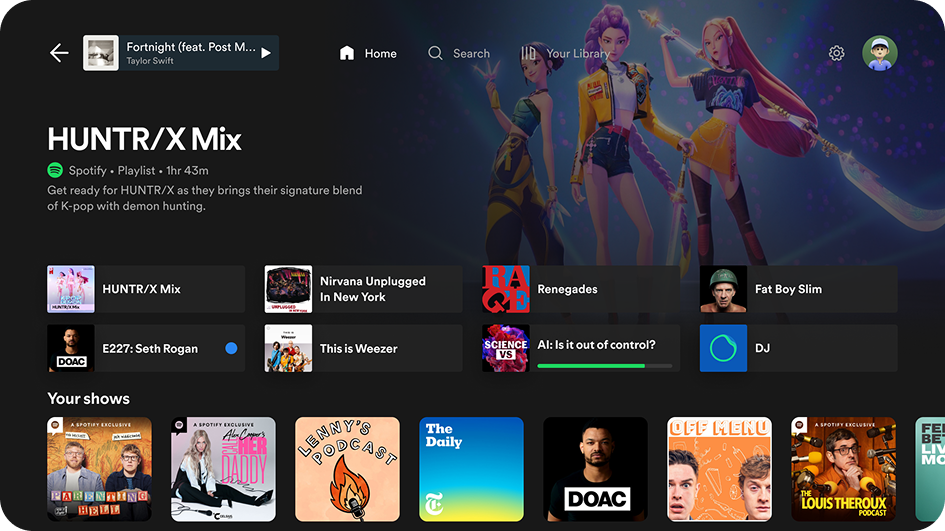
I worked with the TV team to build contextual content recommendations. Meaning the content user gets will be based on their trip parameters.
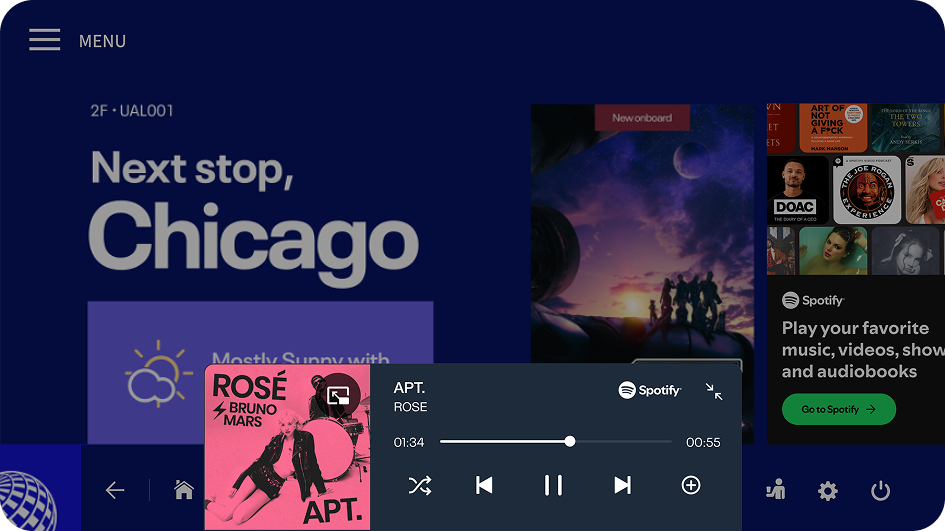
To give users full control, we partnered with United to design an IFE mini-player and introduced background playback logic for multitasking.
Vision
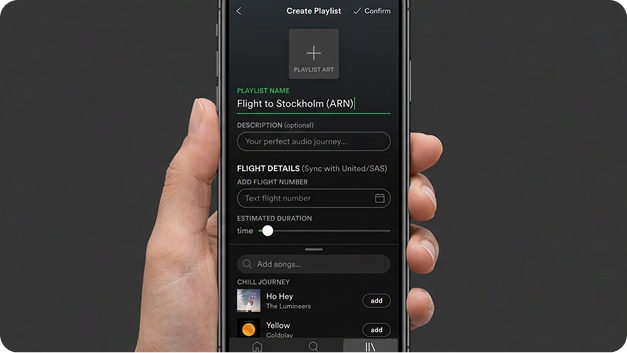
Pre-generated playlists for users to listen to during their flight.
Users should be able to pre-download their content.